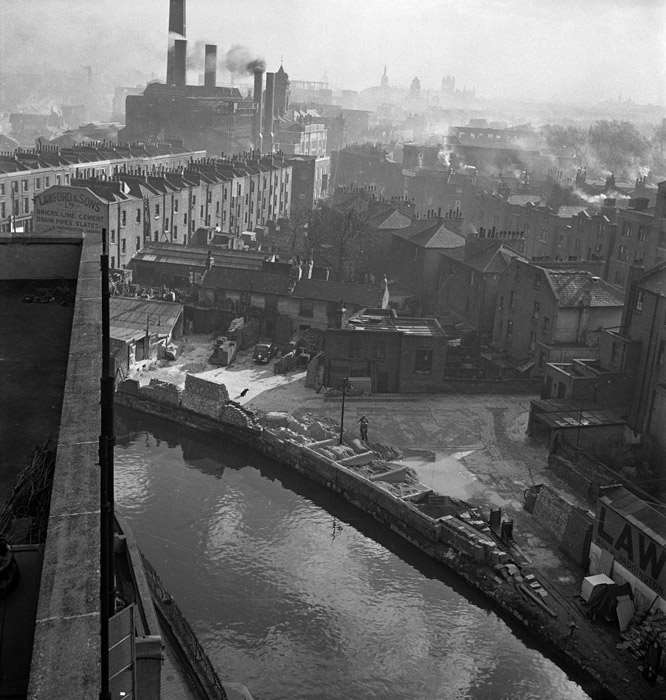
Lawford's Wharf in 1948
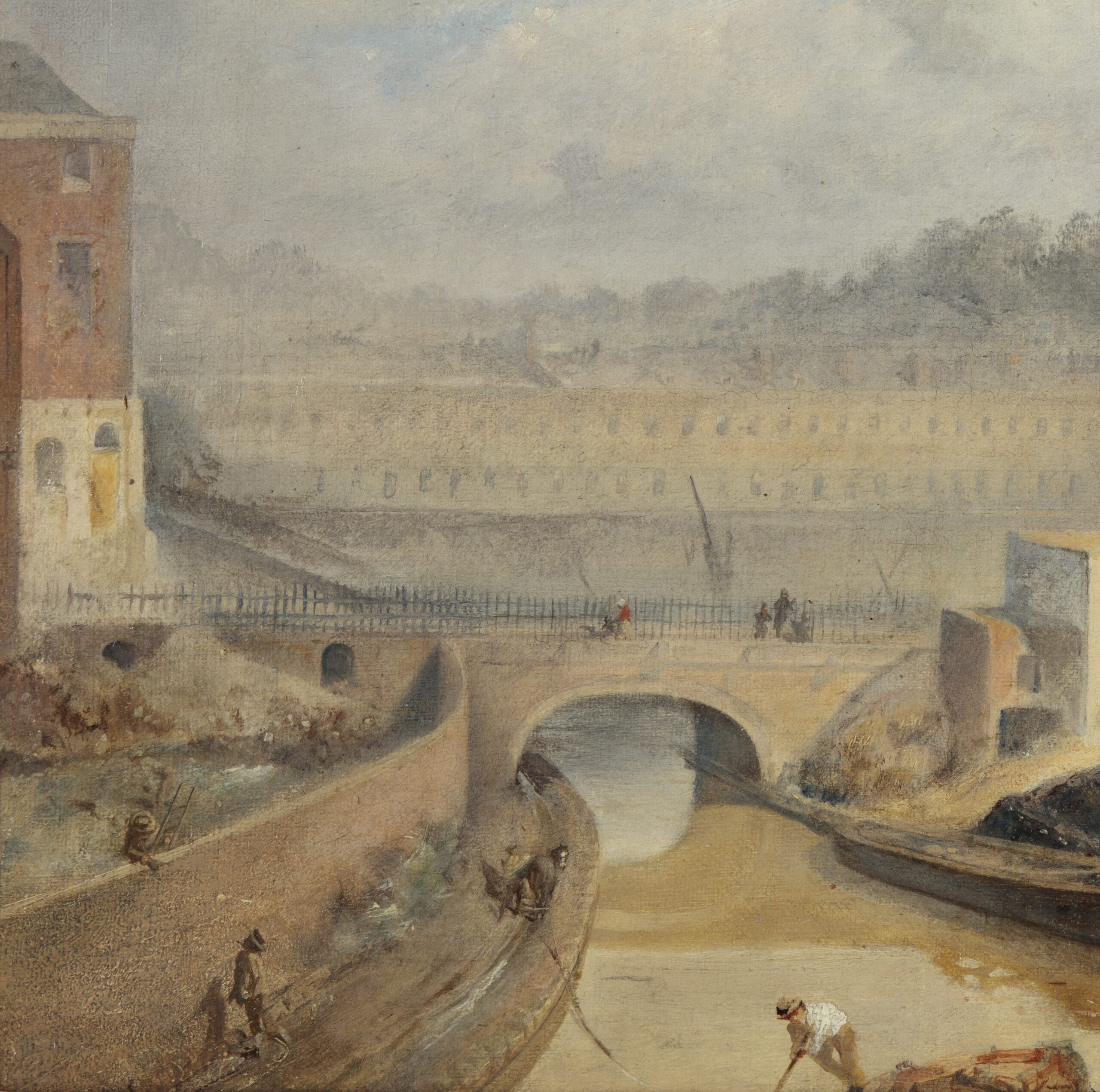
left detail
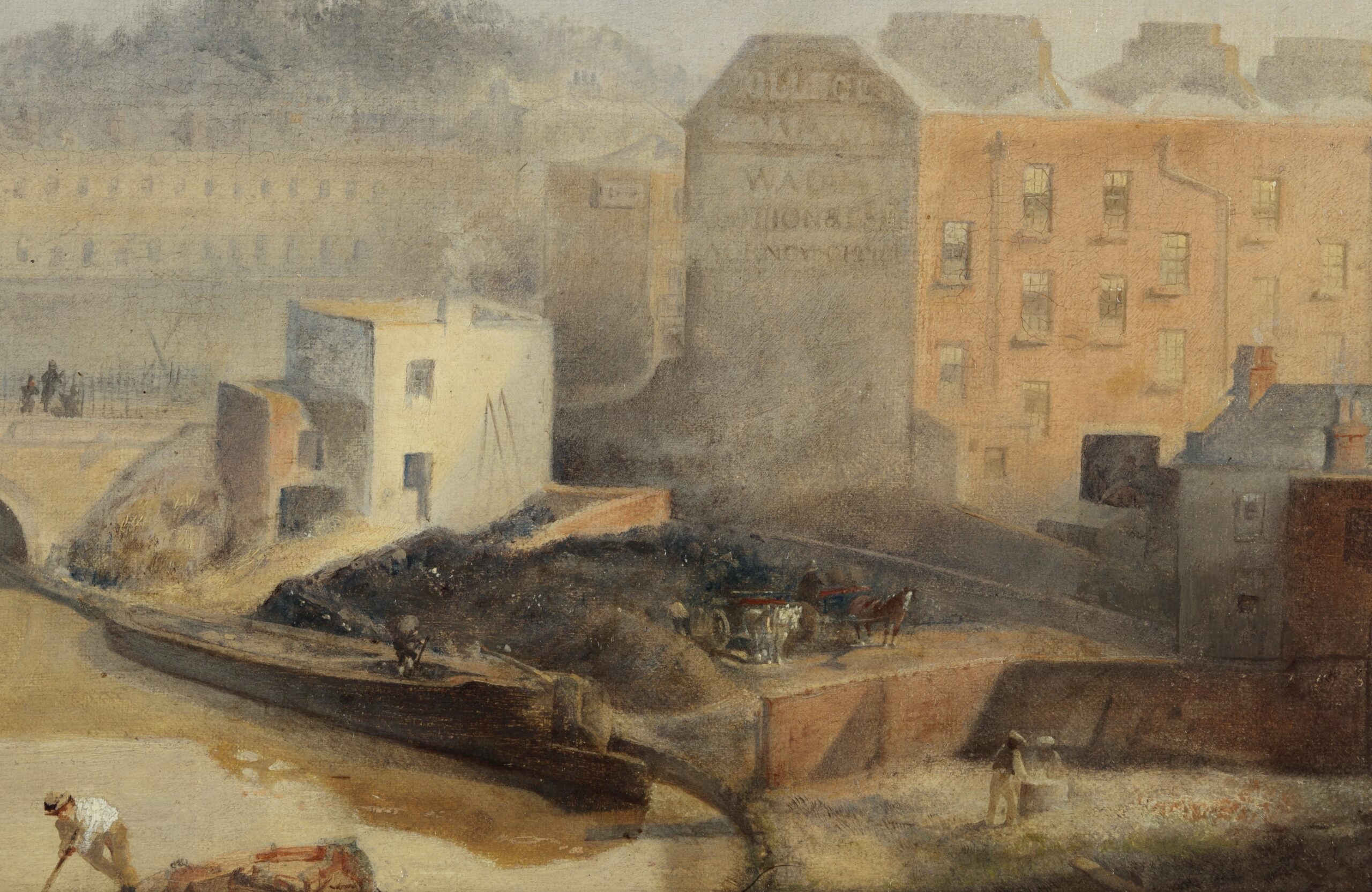
right detail
Click any image to view full size with zoom
John Seguier
1785 – 1856
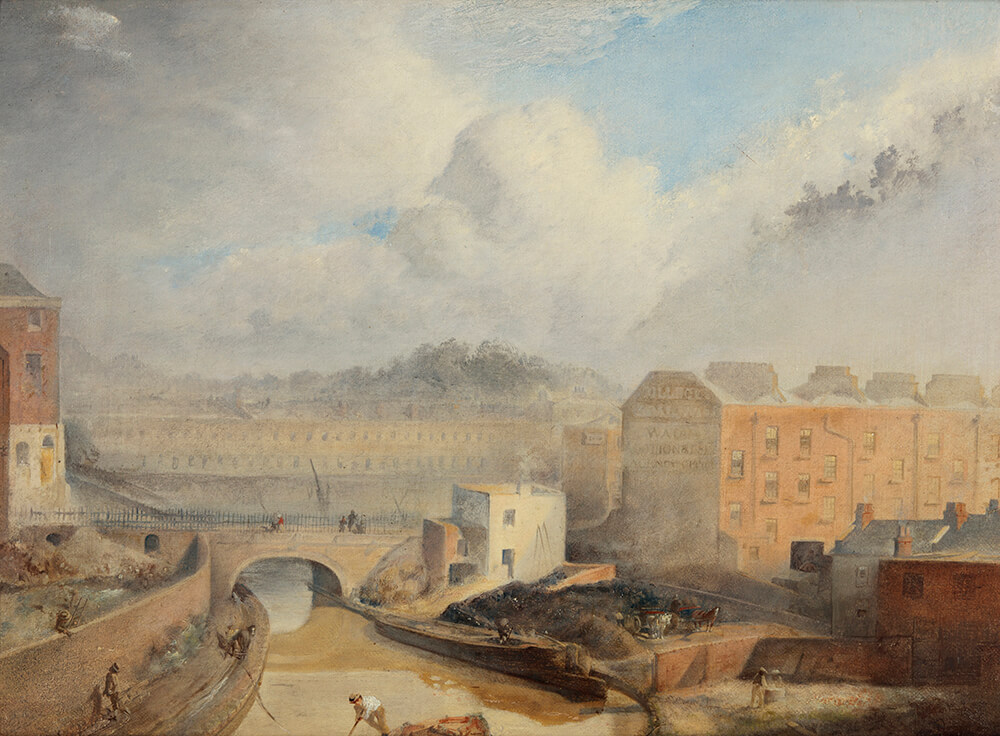
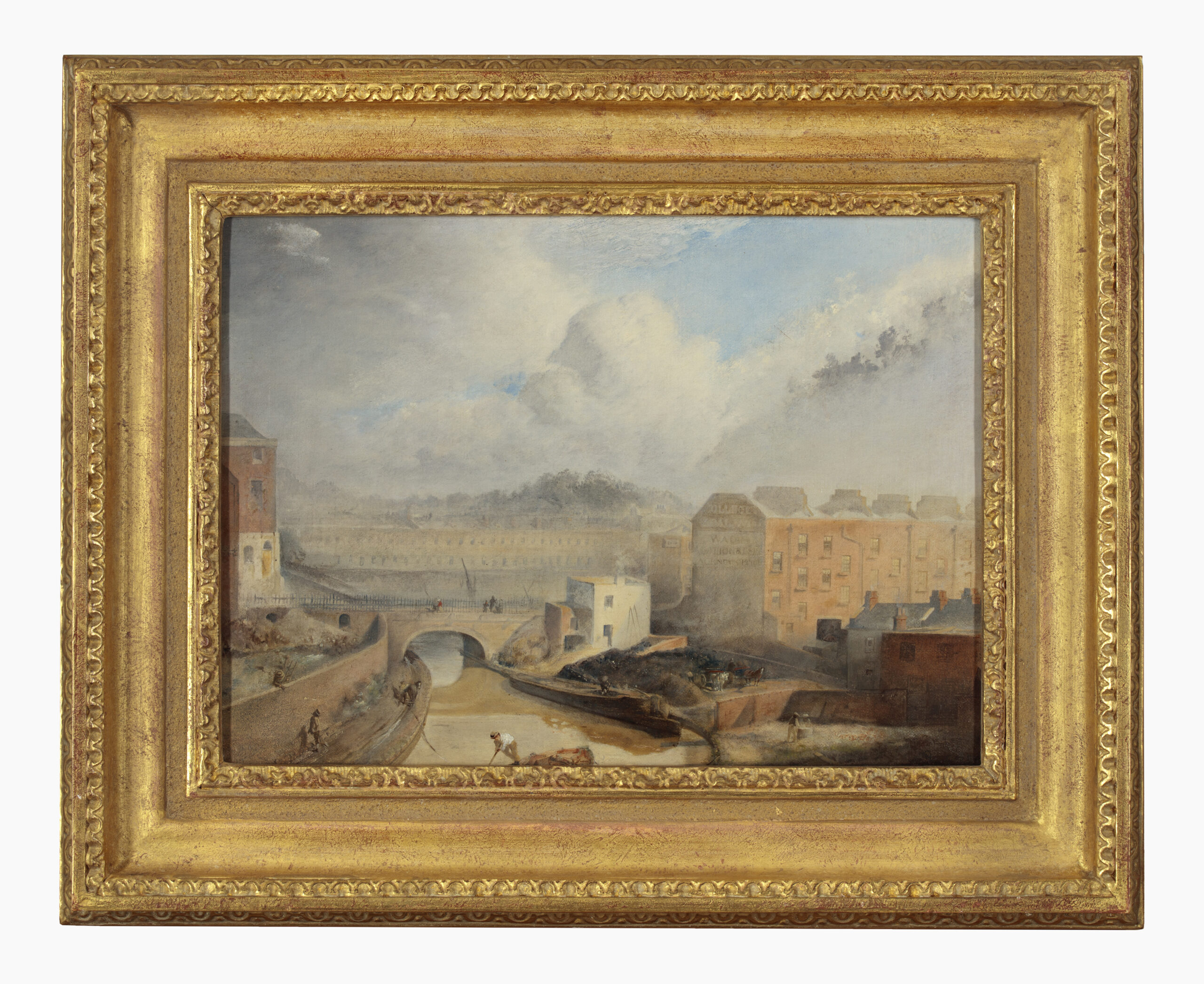
The Regent’s Canal at Bridge 28, College Wharf, Camden Town
Circa 1838-1840
Oil on canvas
10 x 13.9 ins, 25.4 x 35.3 cms.
About the Artist
John Seguier came from a French Huguenot family. The son of David and Elizabeth Seguier, he was baptised on 25 February 1785, at St Martin-In-The-Fields. He died aged 70 in 1856. His father was a picture dealer and copyist. John studied at the Royal Academy schools from 1807 exhibiting paintings at the Royal Academy from 1811 to 1822 as a topographical landscape painter. From the 1830s he worked in partnership with his elder brother William as a picture restorer and dealer, being the more active partner. (This may be why paintings by John are scarce.) William was the first Keeper of the National Gallery, Surveyor Cleaner and Restorer of the Royal Collection and Superintendent of the British Institution, an appointment in which John succeeded him when he died in 1843. John married Margaret Stewart, daughter of the miniature painter Anthony Stewart.
At the time he painted this, John Seguier was living in Camden Town High Street with his 4 year-old son Frederick (information from the 1841 census where he gave his occupation as an artist).
Characteristic of his paintings is a fascination with the effects of raking sunlight and its shadows on ground and buildings. His figures are distinctive, their movement well observed and deftly painted. This painting should be compared with Seguier’s 10 x 12 inch canvas “Excavating Regent’s Canal with a view of Marylebone Chapel” now at the Yale Center for British Art. It was made in 1812-1813, when his address was 5 Buckingham Street, Fitzroy Square. It relates well to the present painting, showing the canal under construction but still in essence a tranquil rural scene bathed in morning sun. In the centre of the picture is an Irish “navigator” leaning on a rail beside the new cut, his dog (a soft-coated Wheaten Terrier, an Irish crofter’s breed) lying beside him.
About this Work
The Regent’s Canal runs from Paddington to Regent’s Canal Dock (now Limehouse Basin) on the Thames. It is a broad canal designed to connect the Paddington arm of the Grand Junction Canal to the docks. Construction began in 1812, it was opened as far as Hampstead Road Lock in 1816 and to Limehouse in 1820. The line had to go north from Paddington to skirt Nash and Burton’s imminent development running up to Regent’s Park. Next, the route of the canal round the north of Camden Town was chosen not only to follow the contour of the Fleet Valley but to avoid the then more developed areas to the south. Wharves and industry soon grew up along the line of the canal and with the building of railways in the 1830s and 1840s the rapid suburbanisation of this whole area transformed its character in a few years.
This fine topographical view is precise in its detail. Bridge 28 is seen from the Camden Town side. It carries Great College Street, now Royal College Street. Building is in progress on the left of the painting, behind the high retaining wall. What was under construction was Lyme Terrace, a row of modest two storey houses mainly still extant. Lyme Terrace was built shortly after 185-181 Great College Street, probably in about 1838-1839. This suggests a date for the painting of around 1838-1840.
In the foreground of Seguier’s painting, the wharf this side of the bridge is already operating, with a barge moored alongside. On the 1834 map, there is nothing shown in this area except the meandering course of the Fleet River before it enters a culvert under the street. By the time of the painting there is a small building at the end of the wharf nearest the bridge and there are two cottages (still extant) at the back of the yard. The barge appears to be delivering a cargo of coal which is in turn being loaded into horse-drawn carts. It is possible that the men working in the bottom right corner of the picture are part of a different business, divided by the brick wall and associated with the smaller building in front of the cottages. There is a trade sign for the wharf painted on the end of the nearby house. The lettering seems to be generic rather than specifically identifying the business.
The wharf was likely begun by a coal merchant and later taken over by a builder’s merchant whose family continued business there for many years. John Eeles Lawford started as a slate merchant in Euston Road in the 1840s. To take advantage of the canal at the time of a local building boom, he moved to the wharf off Lyme Street a few years later. It is named College Wharf on the 1893-96 Ordnance Survey map although it was probably already known as Lawford’s Wharf. There is a good 1948 photograph of it where the sign written on the end house reads: “Lawford & Sons. Bricks, Lime, Cement, Drain Pipes, Slates”.
Further Information
We have an extended version of these details which identifies the various buildings in the painting and includes numerous historic and contemporary images. Please ask if you would like to receive this.
Provenance
“1.Evans, 1 Devonshire Terrace, Camden Town”
This is inscribed in a 19th century hand on the back of the stretcher together with the title:
“ No. 1 View on Regent Canal”.
Evans was probably the original owner.